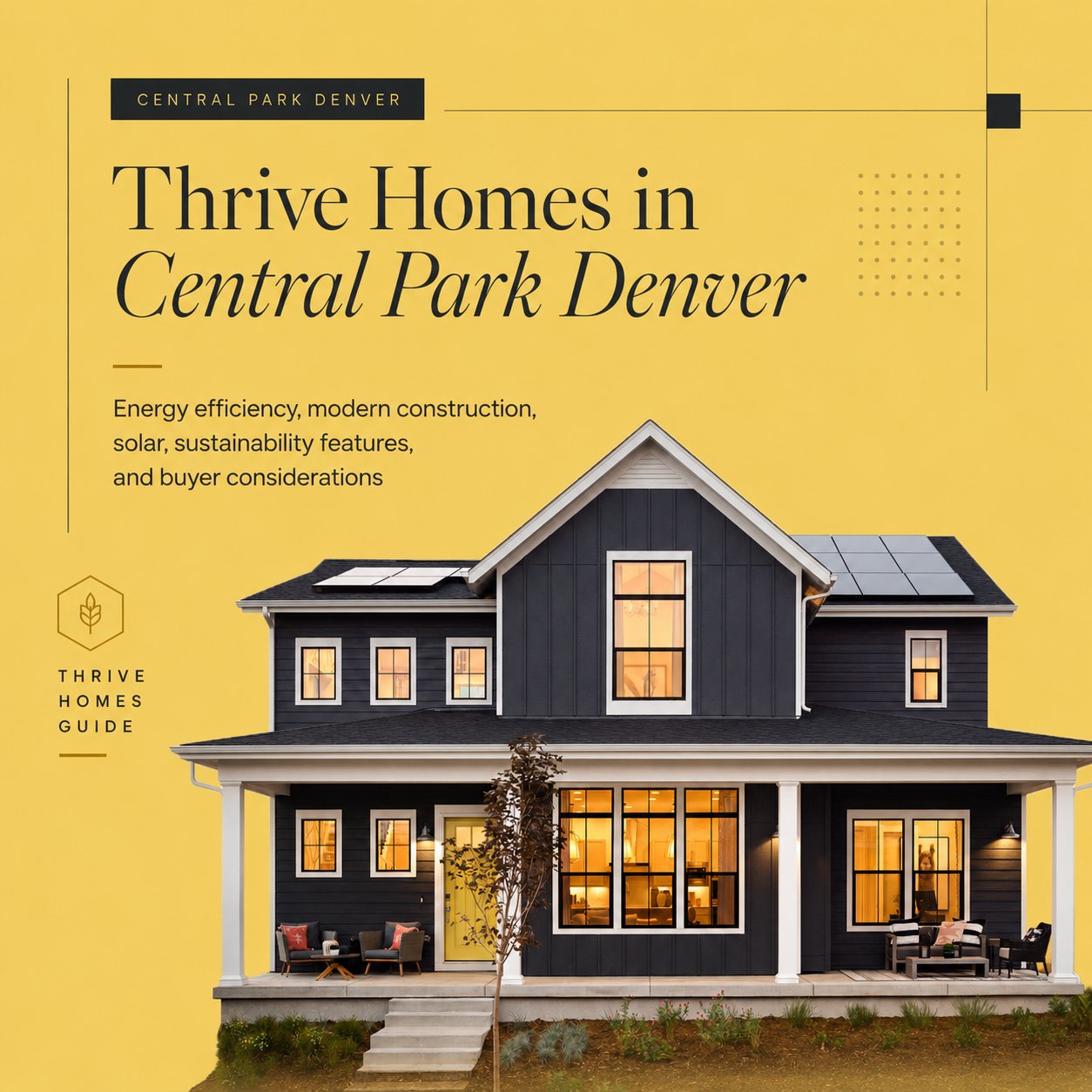
Thrive Homes in Central Park Denver
For buyers who care about energy efficiency and sustainability, one builder stands out in this community more than any other. Thrive homes in Central Park Denver are built around energy performance, with features like standard solar, high efficiency construction, and healthy home certifications that set them apart from much of the surrounding housing stock.
This guide covers what defines a Thrive home, the energy and sustainability features buyers ask about, and the practical considerations to keep in mind, including how to evaluate solar and certifications on a specific property. The goal is a clear and neutral picture so you can decide whether a Thrive home fits your priorities.
Who Thrive Home Builders is
Thrive Home Builders is a locally owned Denver builder that has focused on energy efficient construction for more than two decades. The builder became a recognized national leader in high performance homes, building single family homes and rowhomes across metro Denver, including a long presence in Central Park dating to the Stapleton era.
Where some builders treat energy efficiency as an upgrade, Thrive made it the core of its identity. That focus is the main reason the name comes up so often among sustainability minded buyers.
Energy efficiency at the core
Thrive's defining feature is performance. The builder has committed to constructing its homes to the U.S. Department of Energy Zero Energy Ready Home standard, which involves rigorous efficiency requirements and certification to high Energy Star levels.
In practice, this means Thrive homes are designed to use less energy than typical construction, through a combination of advanced insulation, tight building envelopes, efficient systems, and solar. For buyers, the potential benefits include lower energy bills and more consistent comfort, though actual results vary by home, usage, and weather.
Solar as a standard feature
Thrive was Colorado's first production builder to include solar panels as a standard feature on its homes, and it was among the first to offer a net zero energy option on single family homes in Denver. Net zero refers to a home designed to produce roughly as much energy as it uses over the course of a year.
Solar is a meaningful feature, but it comes with details worth confirming. On any specific home, find out whether the solar system is owned outright, financed, or under a lease or power purchase agreement, since that affects financing, monthly cost, and resale. Owned systems and leased systems are handled very differently in a transaction, so this is one of the first things to verify.
Healthy home and indoor air quality
Beyond energy, Thrive emphasized indoor air quality and healthy home features. The builder became a large producer of EPA Indoor airPLUS qualified homes, which focus on ventilation, filtration, and materials that support cleaner indoor air.
Homeowners often cite benefits like continuous fresh air and a comfortable indoor environment. These are reported experiences tied to the home's design rather than guarantees, so buyers who prioritize air quality should review the specific certifications and systems in a given home.
Sustainable construction details
Thrive built its reputation partly on sustainable building practices. The builder was an early adopter of materials such as beetle kill lumber in its framing, turning a Colorado forest health challenge into a building resource.
For buyers who value sustainability, these details reinforce the brand's identity. They also reflect a broader construction philosophy that tends to show up throughout the home rather than in a single feature.
Collections in Central Park
In Central Park, Thrive built across several collections over time, with names such as Panacea, Vitality, and Elements. These have included both single family homes and rowhomes, giving buyers different footprints and price points while keeping the energy focus consistent.
Because the lineup evolved as neighborhoods opened, it is best to confirm what a specific collection and floor plan offer rather than assuming. If you are weighing attached options like rowhomes, our comparison of condos and townhomes in Central Park is a useful companion.
Buyer considerations
Thrive homes can carry a higher upfront price than some comparable homes, reflecting their efficiency features and certifications. The trade off many buyers weigh is higher initial cost against potentially lower ongoing energy costs over time. Whether that math works for you depends on the specific home, your expected usage, and how long you plan to stay.
A few things to confirm on any Thrive home: the solar ownership structure, the specific certifications and their documentation, the systems and any warranties, and how the home compares on price to recent sales nearby. Our guides to home value and to financing for first time buyers are helpful here.
Resale considerations
For resale, energy efficiency is increasingly valued by a segment of buyers, which can support demand for a well maintained Thrive home. Lower operating costs and strong certifications can be genuine selling points when documented clearly.
As with any home, the fundamentals still govern the outcome. Pricing in line with comparable sales, condition, location, ownership costs, and current market conditions tend to matter most. Clear documentation of solar ownership and certifications helps buyers value the features accurately at resale. Our housing market trends update covers current demand conditions.
How to evaluate a specific Thrive home
The energy story is the headline, but the specifics matter. Confirm the collection and floor plan. Verify the solar ownership structure and gather the certification documentation. Inspect condition and systems. Compare the home to recent sales of similar homes nearby. Understand the HOA and any metro district costs.
Treat the Thrive name as strong context about energy and sustainability, then let the specific home, its documentation, and its comparables guide your decision.
Frequently asked questions
What are Thrive homes in Central Park known for? Energy efficiency and sustainability. Thrive builds to the DOE Zero Energy Ready Home standard, includes solar as a standard feature, and emphasizes healthy home and indoor air quality certifications.
Do Thrive homes come with solar? Thrive was Colorado's first production builder to make solar standard. On any specific home, confirm whether the system is owned, financed, or leased, since that affects cost, financing, and resale.
Are Thrive homes net zero? Thrive was among the first in Denver to offer a net zero energy option, meaning a home designed to produce roughly as much energy as it uses over a year. Verify the specific configuration on an individual home.
Are Thrive homes worth the higher price? The common trade off is higher upfront cost against potentially lower ongoing energy costs. Whether it pays off depends on the specific home, your usage, and how long you plan to stay, so compare it to recent sales nearby.
Interested in a Thrive home in Central Park?
Thrive's energy and sustainability focus can be a strong fit for the right buyer, but the value depends on the specifics, especially solar ownership and certifications. If you would like a neutral read on a particular Thrive listing, reach out to The Neir Team and we will help you verify the details and compare it to the market.
Contact The Neir Team or call (720) 935-4399 to get started.
By Alex Neir, Denver Real Estate Broker
Specializing in Central Park & luxury residential sales