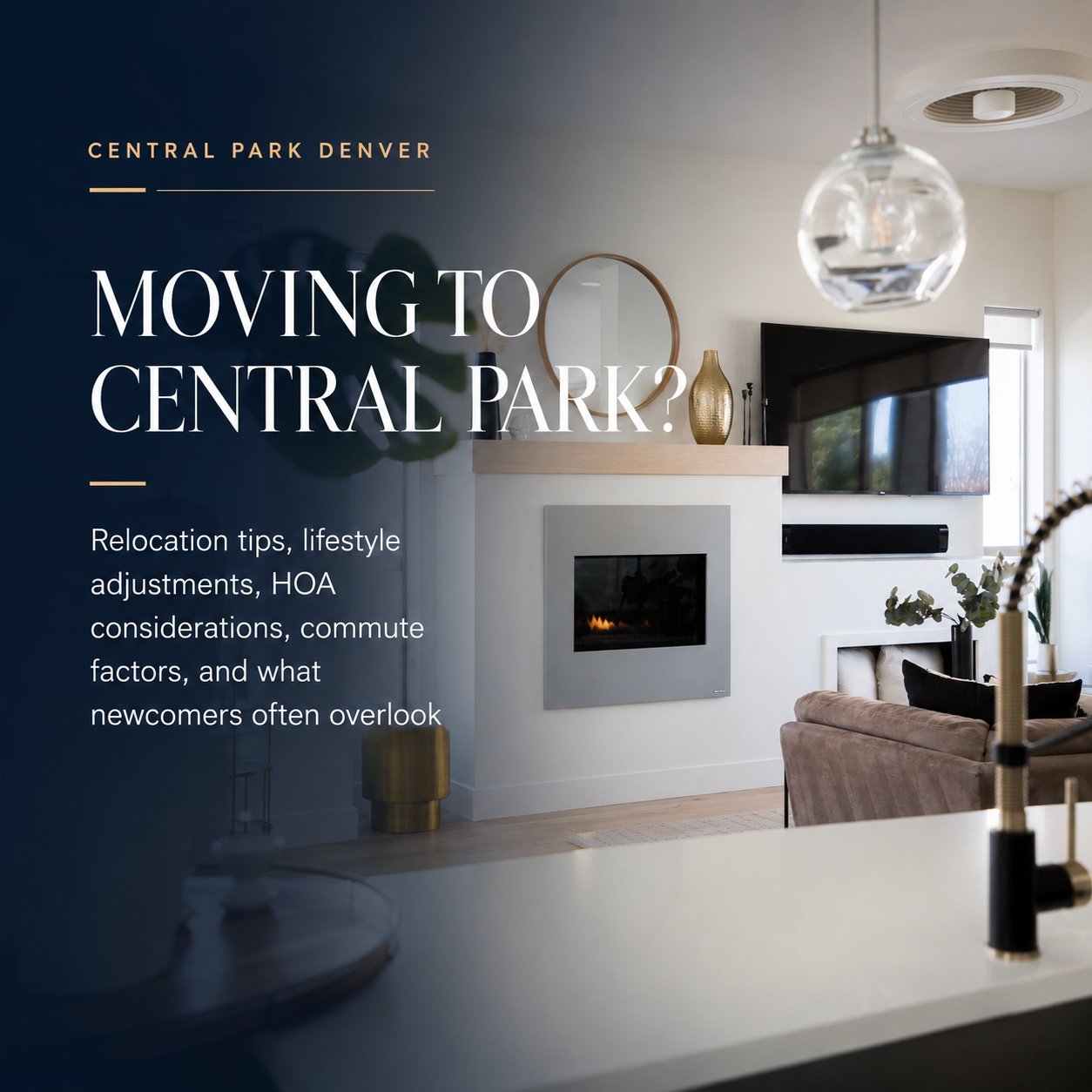
Moving to Central Park Denver: Relocation Guide
Moving to Central Park Denver can be an appealing option for buyers who want newer housing, parks, trails, neighborhood retail, and access to the broader Denver metro area. But like any relocation decision, the experience is better when expectations are clear before the move.
Central Park is a large, master-planned neighborhood with many different sub-areas, housing styles, HOA structures, and lifestyle patterns. This guide covers practical transition tips, what newcomers often overlook, lifestyle adjustments, and FAQs for buyers considering a move to Central Park.
Why People Move to Central Park Denver
Central Park attracts buyers who want a balance between neighborhood convenience and access to the city. The area offers a mix of single-family homes, townhomes, paired homes, condos, parks, trails, retail centers, and newer construction compared to many older Denver neighborhoods.
Common reasons buyers consider moving to Central Park include:
- Newer homes and modern floorplans
- Parks, trails, and open space
- Access to neighborhood retail and restaurants
- Proximity to downtown Denver, DIA, Anschutz, and major roadways
- A wide range of housing types
- A more planned community feel than many older Denver neighborhoods
The neighborhood can be a strong fit for many buyers, but it is important to understand how daily life works before choosing a specific home or sub-area.
Transition Tips for Moving to Central Park Denver
1. Learn the Sub-Areas Before Choosing a Home
Central Park is not one uniform neighborhood. Areas like Eastbridge, Conservatory Green, Central Park West, Beeler Park, North End, South End, and the original sections of the neighborhood can feel different from one another.
Before choosing a home, pay attention to:
- Distance to retail and restaurants
- Proximity to parks and trails
- Commute routes
- Home age and builder
- HOA structure
- Street layout and traffic patterns
A home that looks perfect online may feel very different depending on where it sits within the neighborhood.
2. Budget Beyond the Mortgage Payment
Newcomers often focus on the home price but underestimate the total monthly cost of ownership.
Important costs may include:
- Property taxes
- HOA dues
- Homeowners insurance
- Utilities
- Metro district taxes in some areas
- Maintenance reserves
- Landscaping or snow removal costs
Two homes with similar prices can have very different monthly ownership costs, especially if HOA dues or tax structures differ.
3. Understand the HOA Before You Buy
HOAs are common in Central Park, especially for condos, townhomes, paired homes, and some detached homes.
Before purchasing, review:
- Monthly dues
- What the HOA covers
- Exterior maintenance responsibilities
- Rental restrictions
- Pet rules
- Reserve funds
- Any special assessment history
- Design or exterior modification rules
HOAs can provide convenience, but they also come with rules and financial obligations that should be understood upfront.
4. Test Your Commute
Central Park is well connected, but commute experience varies depending on where you live and where you work.
Consider testing:
- Morning commute times
- Evening commute times
- Routes to downtown Denver
- Routes to DIA
- Routes to Anschutz Medical Campus
- Access to light rail or bus options
- Bike commute possibilities
A location that looks convenient on a map may feel different during peak travel times.
5. Decide How Walkable You Want Daily Life to Be
Central Park is selectively walkable. Some areas are close to town centers, retail, parks, and trails, while others are more car-dependent.
Before buying, ask yourself:
- Do I want to walk to coffee or restaurants?
- Is trail access more important than retail access?
- Do I want to bike for errands?
- How often will I drive for daily needs?
- Do I want to be near a town center or on a quieter residential street?
Central Park offers many lifestyle options, but walkability varies block by block.
What Newcomers Often Overlook
Micro-Location Matters More Than Expected
In Central Park, small location differences can affect both lifestyle and value. Being park-facing, near a trail, close to retail, or located on a quieter street can meaningfully change the ownership experience.
Newcomers sometimes compare homes only by square footage and price, but in Central Park, micro-location can be just as important.
Newer Does Not Always Mean Maintenance-Free
Many Central Park homes are newer than homes in older Denver neighborhoods, but they still require maintenance.
Buyers should still evaluate:
- Roof age
- HVAC systems
- Exterior condition
- Windows
- Drainage
- Appliances
- Builder quality
- Warranty history if applicable
A newer home can reduce some maintenance concerns, but it does not eliminate them.
HOA Dues Can Change the Affordability Picture
A lower-priced condo or townhome may not always have the lowest monthly cost if HOA dues are substantial. Newcomers should compare total monthly payment, not just list price.
This is especially important when comparing:
- Condos vs townhomes
- Townhomes vs paired homes
- Detached homes with lower HOA dues vs attached homes with higher HOA dues
Central Park Has Different Development Phases
Homes in the neighborhood were built over many years, by different builders, and across different phases. As a result, age, style, lot size, architecture, and layout can vary widely.
Older sections may offer more mature landscaping and established streetscapes. Newer sections may offer more modern layouts and energy efficiency. Neither is automatically better. The right choice depends on buyer priorities.
Lifestyle Adjustment: What Daily Life Feels Like
Moving to Central Park often involves a shift toward a more neighborhood-centered lifestyle. Parks, trails, green space, and planned retail areas play a large role in daily routines.
Outdoor Lifestyle
The neighborhood is built around outdoor access. Many residents use the trail system, parks, and open space regularly for walking, biking, recreation, and everyday exercise.
Community Convenience
Central Park has multiple retail and dining nodes, but it is not the same as living in a dense urban neighborhood. Some errands may be walkable or bikeable, while others still require a car.
Housing Variety
One major benefit is the ability to move within the neighborhood as needs change. Buyers may start in a condo or townhome, move into a single-family home later, or eventually downsize into a lower-maintenance option.
Urban-Suburban Balance
Central Park is not purely urban and not purely suburban. It offers a planned, residential feel with access to Denver amenities. For many relocation buyers, that balance is the main appeal.
Buyer Guidance for Relocation Clients
If you are moving to Central Park Denver from outside the area, focus on the full picture rather than just the home itself.
Important questions include:
- Which sub-area best fits my lifestyle?
- How important is walkability?
- What commute routes will I actually use?
- How much HOA involvement am I comfortable with?
- Do I prefer newer construction or mature landscaping?
- What total monthly payment feels sustainable?
- How important is long-term resale flexibility?
The strongest relocation decisions usually come from understanding both the house and the neighborhood around it.
FAQs: Moving to Central Park Denver
1. Is Central Park Denver a good place to move to?
Central Park can be a strong fit for buyers who want newer housing, parks, trails, retail access, and a planned neighborhood environment. The best fit depends on budget, lifestyle preferences, commute needs, and comfort with HOA structures. Buyers should compare sub-areas carefully because different parts of the neighborhood can feel very different.
2. What should newcomers know before moving to Central Park?
Newcomers should understand that Central Park is large and varied. Housing types, HOA dues, tax structures, walkability, and commute convenience can differ significantly by location. It is important to evaluate total monthly cost and micro-location rather than focusing only on square footage or listing price.
3. Is Central Park Denver walkable?
Parts of Central Park are walkable, especially near town centers, parks, and retail areas. Other sections are more dependent on biking or driving. The neighborhood is often very bike-friendly because of its trail network, but buyers who want daily walkability should choose their location carefully.
4. Are HOA dues common in Central Park?
Yes. Many properties in Central Park have HOA dues, especially condos, townhomes, paired homes, and some detached homes. These dues may cover exterior maintenance, landscaping, snow removal, amenities, or common areas. Buyers should review what is included and how dues affect total monthly affordability.
5. What types of homes are available in Central Park Denver?
Central Park offers condos, townhomes, paired homes, smaller single-family homes, larger detached homes, and some luxury properties. This variety makes the neighborhood appealing to many different buyer types, but it also means buyers need to compare ownership costs and maintenance responsibilities carefully.
6. What do relocation buyers often overlook?
Relocation buyers often overlook HOA rules, metro district taxes, commute patterns, micro-location, and differences between development phases. They may also assume that newer construction means no maintenance. A more detailed review of the home, location, and monthly cost structure can help avoid surprises.
7. How should I choose the right area within Central Park?
Start with lifestyle priorities. If you want retail and restaurants nearby, focus on areas close to town centers. If trails and parks matter most, prioritize green space access. If you want newer construction, look toward newer phases. If mature landscaping and established streetscapes matter, older sections may be a better fit.
8. Is Central Park more urban or suburban?
Central Park sits somewhere in between. It offers a planned, residential feel with parks, trails, and newer homes, but it also provides access to Denver employment centers, transit options, and nearby retail. Many buyers choose Central Park because it offers an urban-suburban balance.
Final Thoughts
Moving to Central Park Denver is about more than choosing a home. It is about understanding how the neighborhood functions day to day, how sub-areas differ, and how ownership costs vary by property type.
For relocation buyers, the best approach is to evaluate lifestyle, commute, HOA structure, housing type, and long-term resale potential together. With the right preparation, Central Park can offer a strong combination of Denver access, newer housing, outdoor lifestyle, and neighborhood convenience.
By Alex Neir, Denver Real Estate Broker
Specializing in Central Park & luxury residential sales