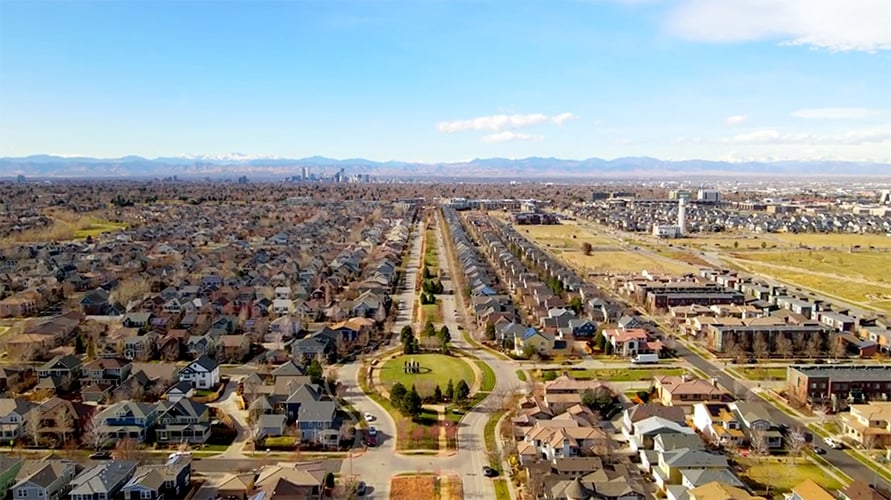
Central Park Denver Real Estate Guide
Central Park (formerly Stapleton) is one of the most “planned” neighborhoods in Denver, and that’s both its superpower and, for some buyers, the reason it won’t feel like home. If you’re relocating, buying your first place in the city, moving up for more space, or selling in 80238, this guide will walk you through how Central Park is actually laid out, what each sub-neighborhood feels like on the ground, the housing stock you’ll encounter, and the ownership/HOA details that matter in real transactions.
I’m writing this from the perspective of a Denver broker who has watched Central Park evolve from early phases to the newest blocks, and who has represented buyers and sellers through the “real life” issues: appraisal gaps, builder quirks, condo HOA budgets, special assessments, solar leases, alley access surprises, and the difference one block can make.
Why Central Park feels different than most Denver neighborhoods
Central Park was built as a master-planned community on the former Stapleton airport site. That shows up in everyday life:
-
Parks are not an afterthought: they’re the organizing system. The community has 60+ parks and open spaces listed by the community, ranging from pocket parks to signature parks.
-
Street design is intentional: more multi-use trails, more alley-loaded garages, and more “nodes” (schools, retail, pools, rec center) than you’d typically see in older Denver neighborhoods.
-
Housing stock is newer and more consistent: you won’t see the same mix of 1890–1950 housing you get in Park Hill, Congress Park, or Wash Park. Most homes here are 2000s forward, with a noticeable wave-by-wave pattern depending on the phase.
-
Transit access is unusually strong for a newer neighborhood: Central Park has its own RTD A Line station connecting to Union Station and Denver International Airport (the A Line serves eight stations total, including Central Park).
Central Park’s layout at a glance
The 12 sub-neighborhoods
Central Park is commonly described as twelve sub-neighborhoods, each with its own pocket-identity and housing mix: North End, Beeler Park, Bluff Lake, Central Park North, Central Park West, Conservatory Green, East 29th Avenue, Eastbridge, South End, Westerly Creek, Wicker Park, and Willow Park East.
How I explain “where to live” to buyers
Instead of getting lost in names, I usually translate Central Park into four practical location decisions:
-
Do you want to be closest to the A Line / Central Park Station area (for airport/downtown commuting)?
-
Do you want to be closest to the 80-acre Central Park (the signature park that anchors the neighborhood)?
-
Do you want to be closest to newer retail nodes and newer construction phases (often North End / later phases)?
-
Do you want the quietest residential feel (more “house-first,” less “retail-first”)?
Those four questions usually narrow the search faster than a map ever will.
Sub-neighborhoods explained like a broker (not a brochure)
Below is the way I describe these areas to clients after walking them, previewing inventory, and seeing what resells best (and what creates friction during inspection, appraisal, and HOA review).
North End
Vibe: the newest energy in Central Park—more “city meets open space,” with quick access to wide-open views near the refuge edge.
Housing: a mix that often includes newer single-family, paired homes, and townhome product depending on the exact pocket and builder phase.
Good for: buyers who want “newest of the new,” modern layouts, and less of the earlier-phase architectural repetition.
Watch-outs: new phases can mean ongoing construction, evolving traffic patterns, and HOA rules that are still being “tested” by actual homeowners.
Beeler Park
Vibe: a neighborhood with a recognizable center and gathering spaces; it often feels like it was designed for walking out your front door and bumping into neighbors. The community describes Beeler Park & Plaza as a focal area with event space and gathering spots.
Housing: you’ll see attractive single-family and attached product nearby; block-by-block feel matters here.
Good for: buyers who value community design and “intentional” public spaces.
Watch-outs: confirm HOA scope (what’s maintained by the master association vs. your sub-association vs. the city).
Bluff Lake
Vibe: nature-forward. If your idea of a reset is a loop trail and birds instead of a coffee shop patio, you’ll like being near Bluff Lake.
Lifestyle anchor: Bluff Lake Nature Center and the surrounding open space are a major draw; the broader area is known for refuge-style nature access.
Housing: varies by pocket—some areas feel tucked, some feel more exposed.
Good for: buyers who want daily access to trails and open space.
Watch-outs: if you need dogs off-leash every day, note that refuge-adjacent nature areas can have rules and restrictions; understand what’s dog-friendly and what isn’t.
Central Park North + Central Park West
Vibe: “closest to the neighborhood’s namesake park.” If you want the signature park as your backyard, you’ll spend time here. The community notes Central Park borders Westerly Creek, Central Park West, and Central Park North.
Lifestyle anchor: Central Park itself—80 acres, Denver’s third largest park, with trails, fields, sledding hill, play features, and more.
Housing: a broad mix, often with strong resale demand due to park adjacency.
Good for: active households, buyers who want “walk to the big park,” and sellers who benefit from that premium.
Watch-outs: park-adjacent homes can bring more foot traffic and event-day parking pressure—great for energy, less great if you want quiet.
Conservatory Green
Vibe: polished, walkable, and often top-of-mind for relocation clients because it feels “put together” immediately.
Housing: lots of attractive streetscapes; attached and detached product depending on pocket.
Good for: buyers who want a strong neighborhood identity and easy daily routines.
Watch-outs: if you’re sensitive to architectural sameness, preview multiple blocks—some feel more varied than others.
East 29th Avenue
Vibe: “main-street adjacent” energy—easy access to daily conveniences and social routines.
Housing: a mix that can include townhomes/rowhomes and single-family, depending on micro-location.
Good for: buyers who want walkability to food/coffee more than walkability to trails.
Watch-outs: confirm parking reality—some attached product has tighter guest parking.
Eastbridge
Vibe: residential with pockets that feel tucked away; good “neighborhood living” energy.
Parks: lots of parks in Eastbridge (example: Arc Park, Arrowhead Park).
Housing: mix of single-family and attached product in many pockets.
Good for: buyers who want calmer residential streets and park access without being on the busiest corridors.
Watch-outs: some homes have very specific builder-era materials, during inspection we pay attention to exterior trim, roof age, and how well prior owners stayed ahead of maintenance.
South End
Vibe: a transition zone that can feel more “Denver-connected” depending on your route patterns.
Housing: varies by phase.
Good for: buyers who want Central Park living but care about quick access south/west.
Watch-outs: arterial adjacency matters, traffic noise can change dramatically from one block to the next.
Westerly Creek
Vibe: classic Central Park living—established, mature (for Central Park), and often a sweet spot for buyers who want “not brand-new but not old.”
Housing: many alley-loaded garages; a lot of functional, family-friendly layouts.
Good for: buyers who want a proven resale story.
Watch-outs: alley access is a lifestyle—great for front-porch streets, but understand snow/ice patterns, trash day logistics, and garage placement.
Wicker Park
Vibe: a little more “boutique street scene” in certain pockets; some streets feel curated.
Parks: the community highlights spaces like Boston Street Garden in Wicker Park.
Housing: tends to feel more design-forward in some areas.
Good for: buyers who care about streetscape aesthetics and a finished look.
Watch-outs: like many Central Park pockets, lot sizes can be modest; yard expectations should match reality.
Willow Park East
Vibe: one of the later-evolution areas where parks and pathways keep getting layered in.
Housing: often newer-feeling relative to earlier phases.
Good for: buyers who want a newer build without being in the newest construction zone.
Watch-outs: HOA docs matter (see HOA section)—the newer the phase, the more “rules + architectural guidelines” can be actively enforced.
Housing types in Central Park (what you’ll actually tour)
Single-family homes
What you’ll see:
-
Alley-loaded garages are common (front-porch streets, garages in back).
-
Lot sizes are often smaller than older Denver neighborhoods, but interior layouts can feel larger and more efficient.
-
A wide range of architectural styles—from ultra-modern to more traditional.
My practical advice:
-
Don’t judge a home by the square footage alone—Central Park floorplans can “live” bigger or smaller depending on stair placement, basement finish, and whether the main floor is truly open or just “open-ish.”
-
Ask about the builder and year. Some years/phases have common themes (HVAC sizing, window packages, exterior materials) that show up in inspections.
Paired homes / duplex-style product
Often a great middle ground: you get more of the single-family feel, sometimes with smaller maintenance responsibilities—but HOA rules vary widely. Some paired homes function like “two homes on one lot,” others function more like a condo in disguise with shared responsibilities.
Key check: party wall agreements, roof responsibility, exterior maintenance scope, and insurance structure.
Townhomes / rowhomes / live-work homes
Central Park has a meaningful amount of attached product—some purely residential, some “live-work” style with street-level flex space.
Pros: location, price point relative to single-family, and lower exterior maintenance (sometimes).
Cons: HOA dues, rules, parking logistics, and (in some cases) tighter appraisal comparables if the product is unique.
Condos
Central Park condos can be excellent for first-time buyers, downsizers, and relocations—if the HOA is healthy.
My condo rule: we don’t just “look at the dues.” We look at:
-
Reserve funding and reserve study
-
Insurance situation (and whether premiums have pushed dues)
-
Owner-occupancy ratio and rental caps
-
Special assessment history or likelihood
Condo HOAs are where buyers get surprised, so this is a place to be extra methodical.
New construction
New construction still matters in Central Park’s later phases, and it can be a strong choice for buyers who want modern systems and less immediate maintenance.
But:
-
Build quality varies by builder and crew, even within the same brand.
-
The contract is builder-written. Your inspection and walkthrough strategy matters.
-
Expect design center pricing and timelines to shift; plan your budget with margin.
Lifestyle: parks, trails, community amenities, and daily rhythm
Parks and open space are the headline
Central Park’s identity is deeply tied to its park system—60+ parks are documented by the community. The signature Central Park is described as 80 acres and Denver’s third largest park, with multi-sport fields, trails, sledding hill, play features, and gathering spaces.
Trails and nature access
-
Bluff Lake Nature Center offers a flat loop-style experience that feels like a nature reset inside the city.
-
The nearby refuge presence (and the broader Central Park/Lowry/Northfield area) is recognized for wildlife and open space access.
Walkability (what that really means here)
In Central Park, “walkable” usually means:
-
Walk to parks, schools, pools, and neighborhood retail nodes
-
Safe-feeling sidewalks and multi-use paths
-
Short errands without needing a car every single time
It does not always mean:
-
A historic commercial strip like Tennyson or Old South Pearl
-
Late-night density or nonstop restaurant variety
If you want “walkable + urban grit,” you may prefer older Denver neighborhoods. If you want “walkable + planned ease,” Central Park tends to hit.
Commute and access: downtown, DIA, and the rest of Denver
The A Line advantage
Central Park’s RTD station on the A Line is a real differentiator for relocations and frequent flyers. The A Line serves eight stations, including Central Park, and runs between Union Station and Denver Airport. RTD also publishes operating facts (like service frequency windows and ridership reporting) for the A Line.
Driving access
Central Park is positioned to move around the metro fairly efficiently, especially if your routine includes:
-
Downtown Denver
-
Anschutz/Fitzsimons area
-
DIA corridors
-
Northfield and the surrounding retail
Broker reality check: commute time is hugely time-of-day dependent. When I’m advising relocation buyers, we test-drive the route during their real commute window, not at 11:00 a.m. on a Tuesday.
HOA and ownership considerations (this is where deals get won or lost)
HOA structure in Central Park is not one-size-fits-all. Many properties have layered governance, which can include:
-
A master community association component
-
A sub-association (townhome/condo/paired-home HOA)
-
Metro district considerations in some pockets (tax structure and services)
The Central Park community itself references a Master Community Association (MCA) and notes that many parks are maintained/managed through it unless otherwise stated.
What I advise buyers to review (before the objection deadline)
-
Budget + reserves: Is the HOA funding reserves responsibly or relying on special assessments?
-
Insurance: In Colorado, HOA insurance has been a moving target. If the HOA’s master policy costs spike, dues follow.
-
Rules that affect daily life: rentals, pets, parking, short-term leasing, exterior changes, fencing, and solar.
-
Maintenance boundaries: roof, exterior paint, windows, decks—who pays and when?
-
Litigation and claims history: especially important for condos/townhomes.
Seller tip (to avoid renegotiations)
If you’re selling, don’t treat HOA docs like a formality. A clean, organized HOA package (budget, reserves, insurance summary, meeting minutes, special assessment history) reduces buyer anxiety and prevents last-minute re-trades. The good news is that the MCA for Central Park is very well organized and has all the documents readily available.
Market overview and pricing trends
As of Q1 2026, the median home price in Central Park sits around $754,000 – $769,000, with average days on market hovering near 32 days. Based on the last six months of activity, Central Park currently has about 1.4 months of inventory, which is firmly a seller-weighted market. Homes that are priced correctly are being absorbed quickly, while buyers are competing over a relatively small pool of available listings.
Sellers: Price with precision — not ambition. We’re positioning for competitive interest within the first 10–14 days — that’s where pricing strategy earns the best net result.
Buyers: If you need negotiation leverage when inventory is tight:
-
Reduce contingencies where reasonable (time-limited inspections, clear walk-through windows)
-
Shorter closing windows can be appealing
-
Earnest money percentage that shows commitment
Central Park pricing behavior (what tends to be true)
-
Central Park often trades at a premium to many comparably distant neighborhoods because buyers value newer construction, schools, parks, and the “move-in-ready” feel.
-
Micro-location matters: park adjacency, retail adjacency, and transit proximity can move the needle more than a casual buyer expects.
-
Townhomes/condos can be more sensitive to interest rates because payment-driven buyers dominate that segment.
How I interpret “days on market” in Central Park
DOM doesn’t mean the same thing in every price bracket:
-
Entry-level attached product can move fast if the HOA is healthy and the unit shows well.
-
High-end single-family can sit longer if it’s priced like Cherry Creek without the land, privacy, and legacy prestige those buyers expect.
Who Central Park is best for (and who it’s not ideal for)
Central Park is usually a great fit for:
-
Relocation buyers who want a low-friction neighborhood: parks, paths, newer housing, predictable layouts, and strong community infrastructure
-
Frequent travelers who value the A Line connection to DIA and Union Station
-
Active households who actually use parks, trails, fields, and outdoor gathering spaces
-
Buyers who want “Denver city limits” while still having a more suburban-easy daily rhythm
Central Park may not be ideal for:
-
Buyers who want historic charm (1910–1940 architecture, big mature trees, original brick bungalows)
-
Buyers who need large lots and privacy as a non-negotiable
-
People who dislike HOA rules or want total freedom on exterior changes, parking, or rentals
-
Buyers who want a fully organic, unplanned neighborhood feel (Central Park is thoughtfully built—and it shows)
FAQs (the questions I get every week)
1) Is Central Park the same thing as Stapleton?
Yes. The community previously known as Stapleton is now called Central Park.
2) What ZIP code is Central Park?
Most of the neighborhood is associated with 80238.
3) How many sub-neighborhoods are there?
Central Park is commonly described as twelve sub-neighborhoods (including North End, Conservatory Green, Eastbridge, etc.).
4) What’s the most “walkable” part?
“Walkable” depends on what you want to walk to—parks vs. retail vs. transit. If you want daily park time, areas bordering the 80-acre Central Park (Central Park North/West) are hard to beat.
5) Can I rely on the train for DIA and downtown?
The RTD A Line includes Central Park Station and runs between Union Station and Denver Airport (eight total stations on the line).
(As with any transit, always check current service alerts and schedules before you commit to a commute routine.)
6) Do most homes have HOAs?
Many do, but the structure varies. Some properties have layered associations (master + sub-association), and many parks are maintained through the community association unless otherwise noted.
7) Are condos and townhomes a safe buy here?
They can be—if the HOA is financially healthy and properly insured. The building is only half the investment; the HOA is the other half.
8) Are there “new construction” opportunities still?
In later phases (especially areas like North End), new construction can still be part of the inventory mix depending on what’s currently delivering. Central Park’s own neighborhood guide shows “Now Selling” status for North End and ongoing resources for homebuilding.
9) What surprises buyers most after moving in?
Two things:
-
Alley living: it’s great for front-porch neighborhoods, but it changes trash day, snow melt patterns, and guest parking habits.
-
HOA rules: not usually “bad,” but they’re real—and they can impact rentals, parking, and exterior personalization.
10) What should sellers do before listing in Central Park?
In this neighborhood, condition and clarity win:
-
Pre-inspection (often worth it)
-
Tight HOA documentation package
-
A pricing strategy that reflects micro-location (park adjacency, retail adjacency, transit proximity) rather than just a neighborhood-wide average
Demographics and neighborhood data
Denver has published neighborhood profile data for Central Park (including historic ACS-based metrics like median age, median income, and homeownership rates). Central Park demographics, points of interest and employment data.
Disclaimer
Real estate market conditions, pricing, inventory, HOA budgets, insurance costs, and lending guidelines change over time. This guide is intended to help you understand Central Park’s structure and decision points, but you should verify current data (MLS activity, HOA documents, and financing requirements) before making a purchase or sale decision.
By Alex Neir, Denver Real Estate Broker
Specializing in Central Park & luxury residential sales