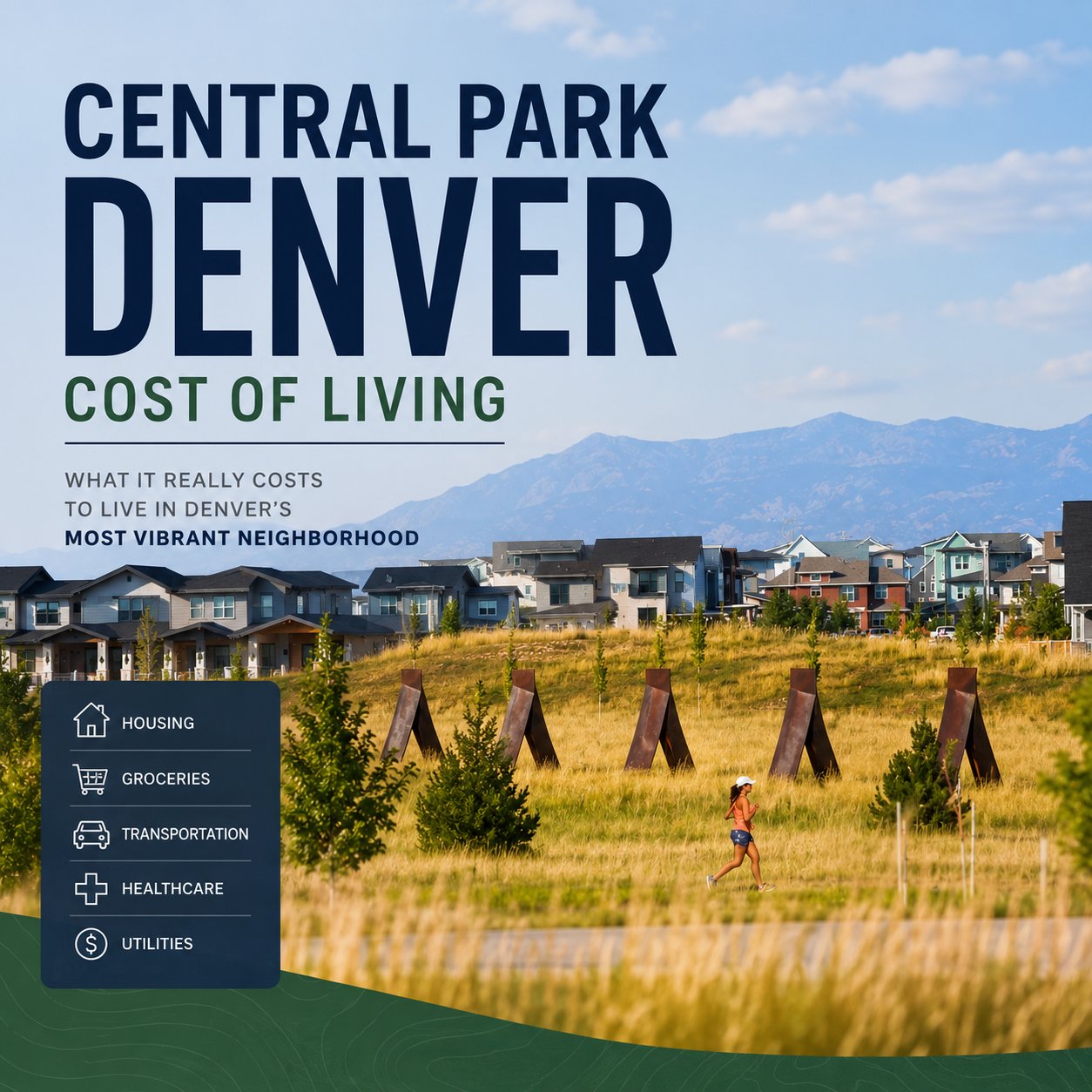
Central Park Denver Cost of Living
Understanding the Central Park Denver cost of living is an important step for buyers, renters, and relocation clients evaluating whether the neighborhood aligns with their financial goals and lifestyle expectations.
Located within Central Park Denver, the community offers a blend of newer housing, extensive amenities, and planned infrastructure that can influence both monthly expenses and long-term ownership costs. While housing is often the largest factor, utilities, HOA dues, transportation, and lifestyle spending all contribute to the overall cost of living.
This guide provides a neutral, data-driven overview of what residents should expect.
Housing Costs: The Largest Expense
Housing is typically the most significant contributor to the cost of living in Central Park.
Ownership Costs May Include:
- Mortgage principal and interest
- Property taxes
- Homeowners insurance
- HOA dues
- Maintenance and repairs
Rental Costs May Include:
- Monthly rent
- Utilities
- Parking or storage fees
- HOA-related pass-through expenses in some leases
Because Central Park includes a wide range of housing types—from condos and townhomes to larger detached homes—monthly housing costs can vary substantially.
How Central Park Compares to Broader Denver
Compared to some older Denver neighborhoods, Central Park often carries:
- Higher home purchase prices for newer construction
- Higher HOA prevalence
- Potential metro district taxes in some areas
However, buyers may also receive:
- Newer infrastructure and systems
- Lower near-term maintenance needs
- Access to extensive parks and amenities
Key takeaway: Cost of living should be evaluated based on total ownership experience, not just home price.
Utility Expectations
Utility costs vary depending on:
- Home size
- Construction age and efficiency
- Seasonal weather patterns
- Energy usage habits
Typical utilities may include:
- Electricity
- Natural gas
- Water and sewer
- Internet and cable
- Trash and recycling
Newer Homes vs Older Homes
Many newer Central Park homes are more energy efficient, which can help moderate utility costs compared to older housing stock elsewhere in Denver.
However:
- Larger homes may still carry substantial heating and cooling expenses
- Multi-story layouts can affect energy consumption
HOA Impact on Cost of Living
HOAs are one of the most important—and sometimes overlooked—components of Central Park’s cost structure.
HOA dues may cover:
- Landscaping
- Snow removal
- Exterior maintenance
- Community amenities
- Insurance for shared areas
Why HOA costs matter
Monthly dues directly impact:
- Housing affordability
- Mortgage qualification ratios
- Long-term ownership expenses
HOA costs vary significantly depending on:
- Property type
- Community amenities
- Level of maintenance provided
Insight: Lower purchase price does not always mean lower monthly cost if HOA dues are substantial.
Transportation and Commuting Costs
Transportation costs depend heavily on commute patterns and location within the neighborhood.
Common transportation expenses:
- Fuel and vehicle maintenance
- Parking
- Public transit usage
- Tolls depending on commute routes
Central Park offers reasonable access to downtown Denver and major employment areas, though many residents still rely primarily on personal vehicles.
Lifestyle and Convenience Spending
Lifestyle spending can also influence the perceived cost of living.
Common discretionary expenses:
- Dining and entertainment
- Fitness memberships
- Childcare and activities
- Recreation and outdoor activities
Central Park’s planned retail and amenity structure may increase convenience but can also shape spending habits depending on lifestyle preferences.
Long-Term Ownership Considerations
When evaluating affordability, buyers should think beyond the first year of ownership.
Long-term variables include:
- Property tax adjustments
- HOA increases over time
- Insurance cost changes
- Maintenance and replacement cycles
Understanding these costs upfront helps create more sustainable long-term budgeting.
FAQs: Central Park Denver Cost of Living
1. Is Central Park more expensive than other Denver neighborhoods?
In many cases, yes—particularly for newer homes and HOA-managed properties. However, the neighborhood also offers newer infrastructure and amenities that some buyers consider valuable tradeoffs.
2. Are HOA dues common in Central Park?
Yes. Many condos, townhomes, and some detached homes are part of HOA-managed communities with varying monthly dues.
3. Do newer homes have lower utility costs?
Often, yes. Many newer homes are more energy efficient, though utility costs still depend on size, layout, and usage habits.
4. How important are property taxes when budgeting?
Very important. Taxes, including metro district taxes in some areas, can materially affect monthly ownership costs.
5. Is Central Park affordable for first-time buyers?
Affordability depends on budget, housing type, and financing. Condos and townhomes may provide more accessible entry points than detached homes.
6. Do HOA fees replace maintenance costs?
Not entirely. While HOAs may cover certain exterior or shared maintenance items, owners should still budget for repairs and long-term upkeep.
7. What is the biggest factor in Central Park’s cost of living?
Housing costs—including mortgage payments, taxes, insurance, and HOA dues—are typically the largest component.
Final Thoughts
The Central Park Denver cost of living is shaped primarily by housing, HOA structures, utilities, and long-term ownership expenses. While costs may be higher than some surrounding areas, many residents are drawn to the neighborhood’s newer homes, extensive parks, and master-planned design.
Evaluating affordability through the lens of total monthly and long-term costs provides a more accurate picture than purchase price alone.
By Alex Neir, Denver Real Estate Broker
Specializing in Central Park & luxury residential sales